What Gear Design Is Used in the NYP Series Gear Pumps to Achieve Low-Pulsation Delivery?
2026-06-22 17:08:59
Read:
Share:
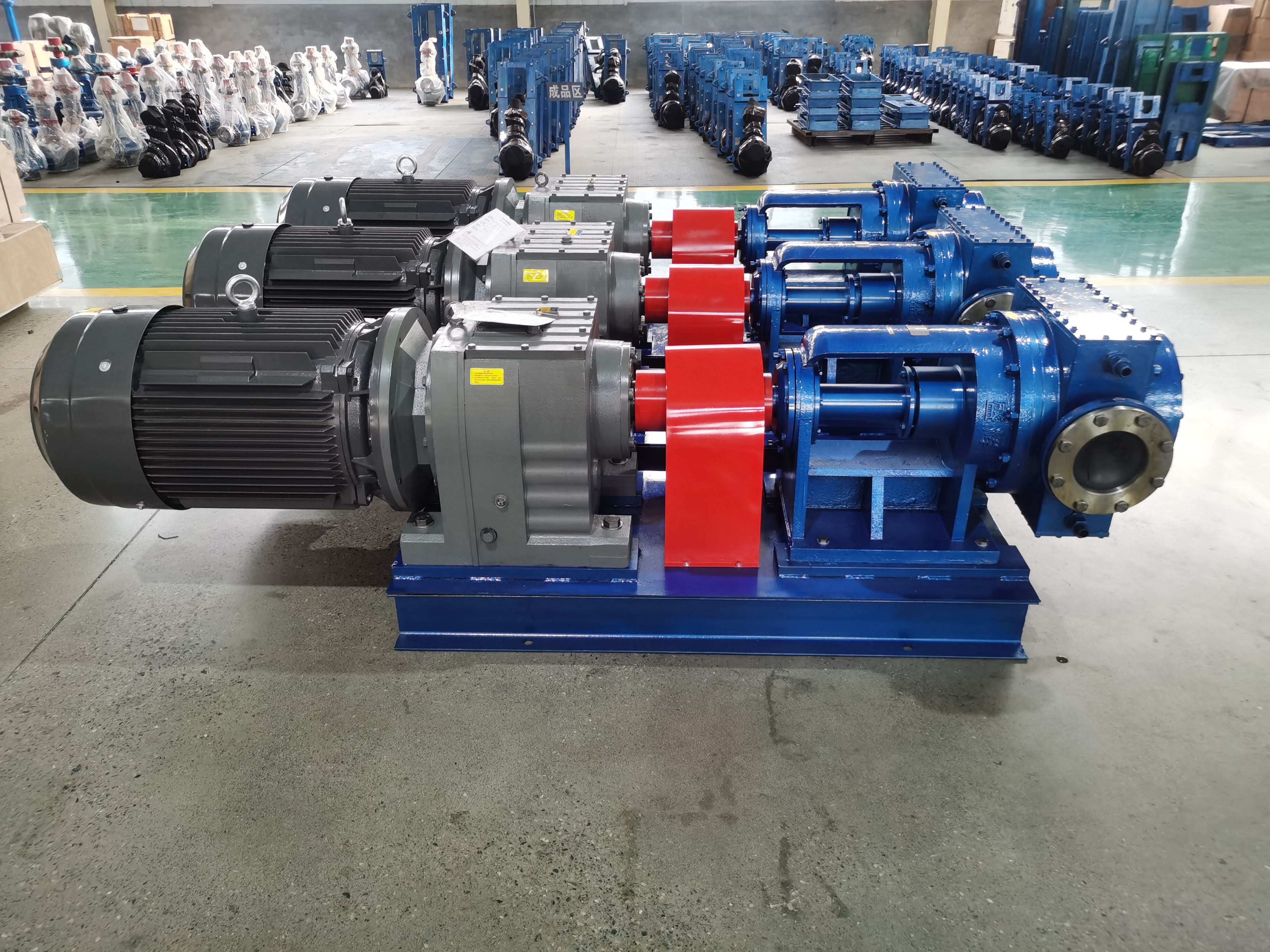
NYP series gear pumps typically serve as positive-displacement pumping equipment and play a crucial role in the transfer of high-viscosity fluids. Compared to traditional external gear pumps, the design featuring co-rotating inner and outer rotors significantly reduces flow rate fluctuations and pulsations during operation, enabling smoother and more continuous fluid transfer. This structural feature not only minimizes vibration and noise during operation but also provides reliable fluid transfer solutions for industries such as food processing, petrochemicals, road construction, and consumer chemicals.
The core components of this series of equipment consist of an inner rotor and an outer rotor, which are mounted eccentrically and rotate in sync. When the equipment is in operation, the driven inner rotor drives the outer rotor to rotate in the same direction; the volume between the teeth gradually increases, creating a vacuum that draws the medium into the pump chamber. The medium is continuously conveyed to the outlet as the inter-tooth volume in the discharge zone gradually decreases, causing the medium to be squeezed. With the inner and outer rotors maintaining continuous multi-tooth meshing at all times, the volume changes are more uniform throughout the entire conveying process, effectively eliminating the significant flow fluctuations caused by the periodic single-tooth meshing found in traditional gear pumps.
Generally speaking, pulsation is primarily caused by periodic changes in the instantaneous displacement of the pump chamber. When the magnitude of these displacement changes is significant, the fluid velocity and pressure in the pipeline fluctuate accordingly, resulting in pulsation. NYP high-viscosity gear pump utilizes a special tooth profile design that allows multiple sealed chambers to alternately perform suction and discharge during rotation, ensuring a continuous transition between each working chamber. When one chamber enters the discharge phase, the other chambers maintain a stable delivery state, resulting in a nearly continuous flow output, reducing instantaneous displacement variations and improving flow stability.
Conventional gear pumps are prone to localized pressure fluctuations during gear meshing, which causes the fluid to be subjected to periodic compression and ultimately results in pressure pulsations. In contrast, the meshing process of this equipment’s rotors is smoother; the medium is transferred gradually along the tooth profiles, resulting in a smoother pressure variation curve that reduces pressure peaks and pulse frequency. Therefore, it is particularly suitable for pumping media that are sensitive to shear or require the preservation of their physical properties. At the same time, a stable flow rate reduces pipeline vibration and equipment resonance, thereby lowering the mechanical load on valves, flow meters, and sealing components, and extending the system’s service life. From another perspective, stable pressure fluctuations also help improve metering accuracy and process control precision, meeting the requirements of modern industrial production for continuous, automated, and precision operations.
Thanks to their co-rotating internal and external rotor meshing structure, multi-chamber continuous delivery principle, and optimized tooth profile design, NYP gear oil pumps provide continuous, stable, and low-pulsation delivery across various industries, offering efficient and reliable solutions for complex operating conditions.