How Should You Choose Between Cast Iron and Stainless Steel for WQ Submersible Pumps?
2026-05-18 16:56:24
Read:
Share:
When considering the WQ submersible centrifugal pumps, some users often find themselves torn between choosing a cast iron or stainless steel pump body. This decision must be based on actual operating conditions to ensure that both the material and the pump’s performance can be fully utilized. To help you make the right choice, we will analyze the advantages, disadvantages, and suitable applications of these two materials from a practical perspective.
Generally, the standard configuration of the WQ series features a cast iron pump body, which provides excellent resistance to pressure and impact, allowing it to easily handle sewage containing hard particles such as sand, small stones, and construction slurry. With higher hardness and superior wear resistance compared to ordinary stainless steel, it experiences slower wear on the impeller and pump casing during long-term conveyance of abrasive media. Alternatively, the manufacturing process for cast iron is more mature, allowing for complex flow path geometries such as dual-channel or vortex impellers, which is critical for enhancing clog-free performance. In terms of cost, cast iron is typically less expensive than stainless steel of the same specifications for applications like rainwater, domestic sewage, construction site drainage, or river water containing small amounts of silt, representing the most cost-effective choice.
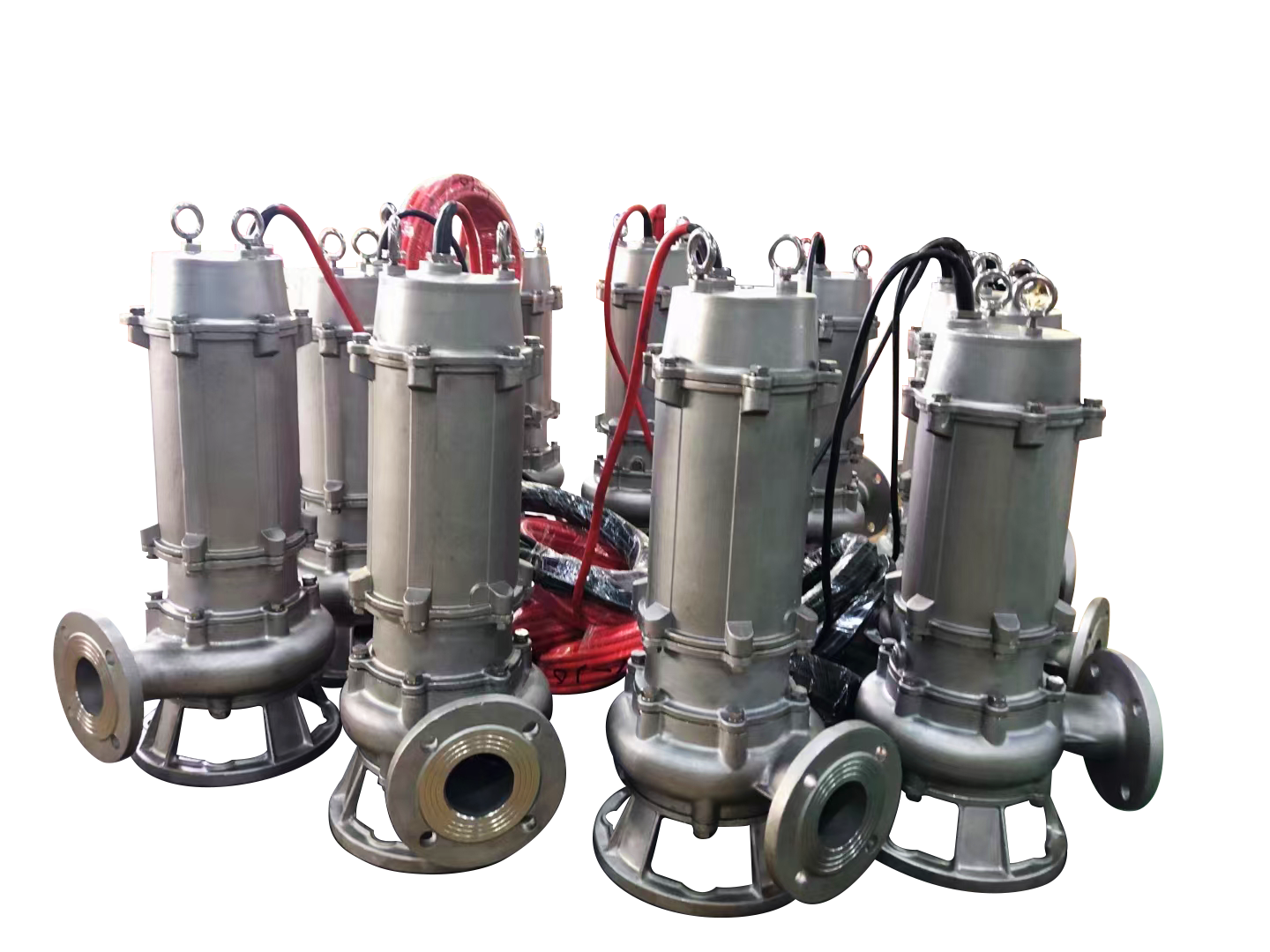
Stainless steel grade 304 offers excellent resistance to media like seawater, chemical wastewater, saline wastewater, weak alkalis, weak acids, and chloride solutions. Unlike cast iron, it does not suffer from pitting, intergranular corrosion, or even perforation, making it a superior choice for applications such as marine aquaculture facilities, food processing plants, and pharmaceutical factories. Its surface is also less prone to adsorbing fibrous contaminants, so the risk of flow channel blockage is lower than with cast iron when handling wastewater containing small amounts of long fibers or plastic impurities. In applications with high hygiene requirements, such as food, beverage, and biopharmaceutical industries, 304 stainless steel ensures that the medium remains uncontaminated by the pump body material while also facilitating easier cleaning and disinfection. It is important to note, however, that 304 stainless steel has lower hardness and wear resistance than cast iron. In applications involving large amounts of construction silt or the conveyance of slag, the impeller wears down very quickly, leading to reduced conveyance efficiency and increased vibration.
The above outlines the advantages and disadvantages of cast iron and 304 stainless steel. But how do you choose the right material based on specific operating conditions? We’ve provided some practical guidelines to help you make the right selection.
First, you need to assess the corrosiveness of the medium. When the medium being transported is municipal sewage, domestic wastewater, or agricultural irrigation runoff, which typically have a neutral or slightly alkaline pH, cast iron is perfectly suitable. If the medium originates from chemical plants, textile dyeing plants, electroplating plants, or contains salt crystals, we recommend selecting 304 stainless steel. Second, you need to assess the content and hardness of solid particles in the medium. When the wastewater primarily contains soft debris such as cloth strips, feces, paper, and small amounts of fine sand, cast iron is the preferred choice from a cost perspective. If the liquid medium contains high-hardness abrasive particles such as broken glass or mining tailings, it is strongly recommended to choose more wear-resistant cast iron to extend the equipment’s service life. Third, the operating environment must be considered. For installations in outdoor settings or pump pits where moisture is present and residual water may accumulate inside the pump when it is not in operation, cast iron will rust more quickly; however, this will not affect its performance for several years. In cases where the equipment will be idle for extended periods and the interior cannot be kept dry during downtime, stainless steel should be selected to prevent rusting of the pump body and subsequent impeller seizure. For food and beverage applications, where the water is neutral, 304 stainless steel is also recommended to meet hygiene standards. Finally, production budget and lifecycle costs must be considered. While cast iron WQ centrifugal water pumps have a relatively low initial purchase cost, their service life in corrosive environments may be limited to just one or two years, requiring frequent maintenance. Although stainless steel pumps involve higher upfront costs, they can last 5–8 years without replacement if the operating conditions and environment are suitable. Therefore, the choice should be based on production costs and the equipment’s lifecycle.
In summary, when selecting a WQ centrifugal pumped made of cast iron or stainless steel, you should consider a combination of factors, including the corrosiveness of the medium, the content and hardness of solids, operating conditions, as well as the overall production budget and operating costs. If you are still unsure about which material to choose, please contact us, so we can help you select the most suitable option based on your specific medium and operating conditions, ensuring efficient production.